2018年12月2日星期日
Most popular Handmade Persian Carpet in the world.
Most popular Handmade Persian Carpet in the world.
www.nanyangcarpet.com
Email: office@nanyangcarpet.com,
WhatsApp/Phone: +86 150 3823 8579


Can you tell the different between the two Persian handmade silk rug?
Can you tell the different between the two Persian handmade silk rug?
www.nanyangcarpet.com
Email: office@nanyangcarpet.com,
WhatsApp/Phone: +86 150 3823 8579
How to roll up soft Handmade Persian carpet at home?
Rolling up a soft handmade Persian carpet is a best way to keep it for a long time when you don't use it.
www.nanyangcarpet.com
Email: office@nanyangcarpet.com,
WhatsApp/Phone: +86 150 3823 8579
Deliver the 2x3ft Handwoven Oriental Rugs
A customer purchased 6 pieces small size 2x3ft(61x91cm) Silk Handwoven Oriental Rugs from us,we will deliver these 2'x3' handwoven Silk Rugs today.
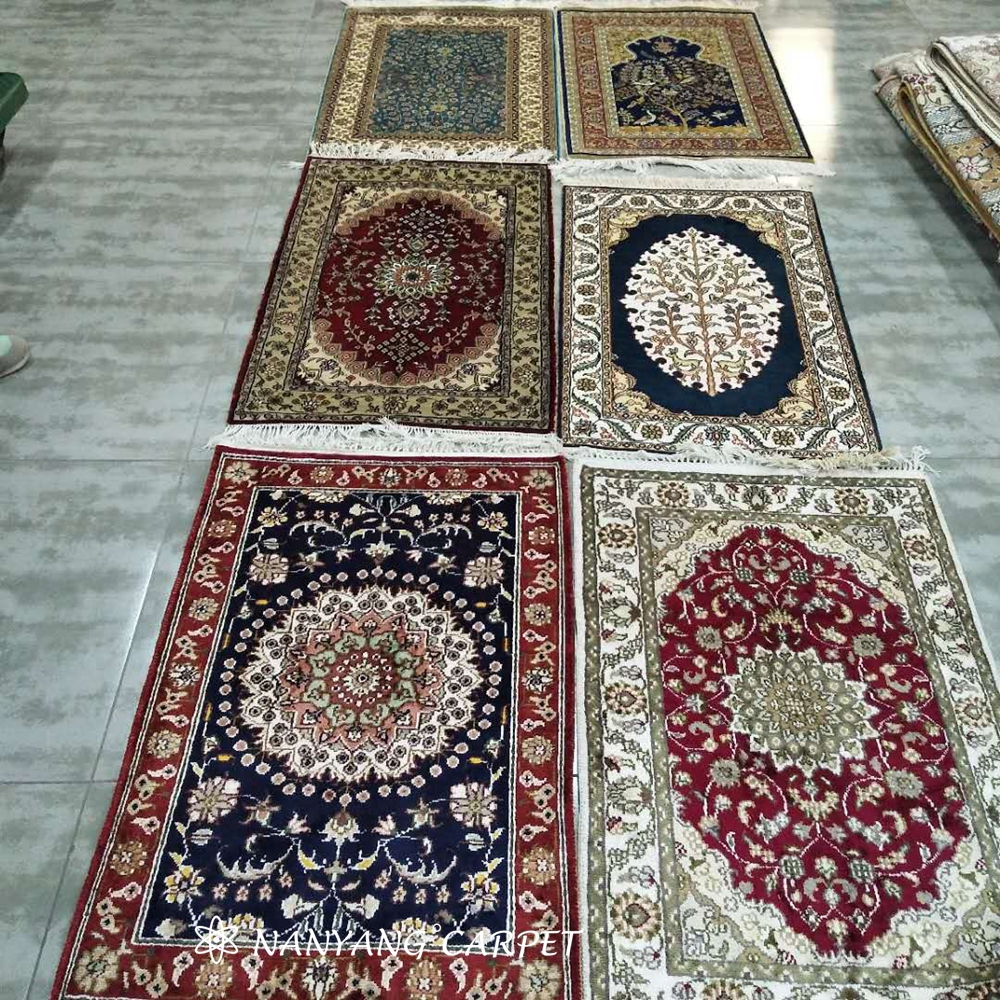
Among these 6 pieces 2x3ft Oriental handwoven rugs , there are 1 light blue rugs,3 deep blue rugs and 2 bright red rugs.The exquisite designs of these small size silk rugs mainly covers prayer pattern,medallion pattern,animal pattern and Arabic Arabesque pattern.
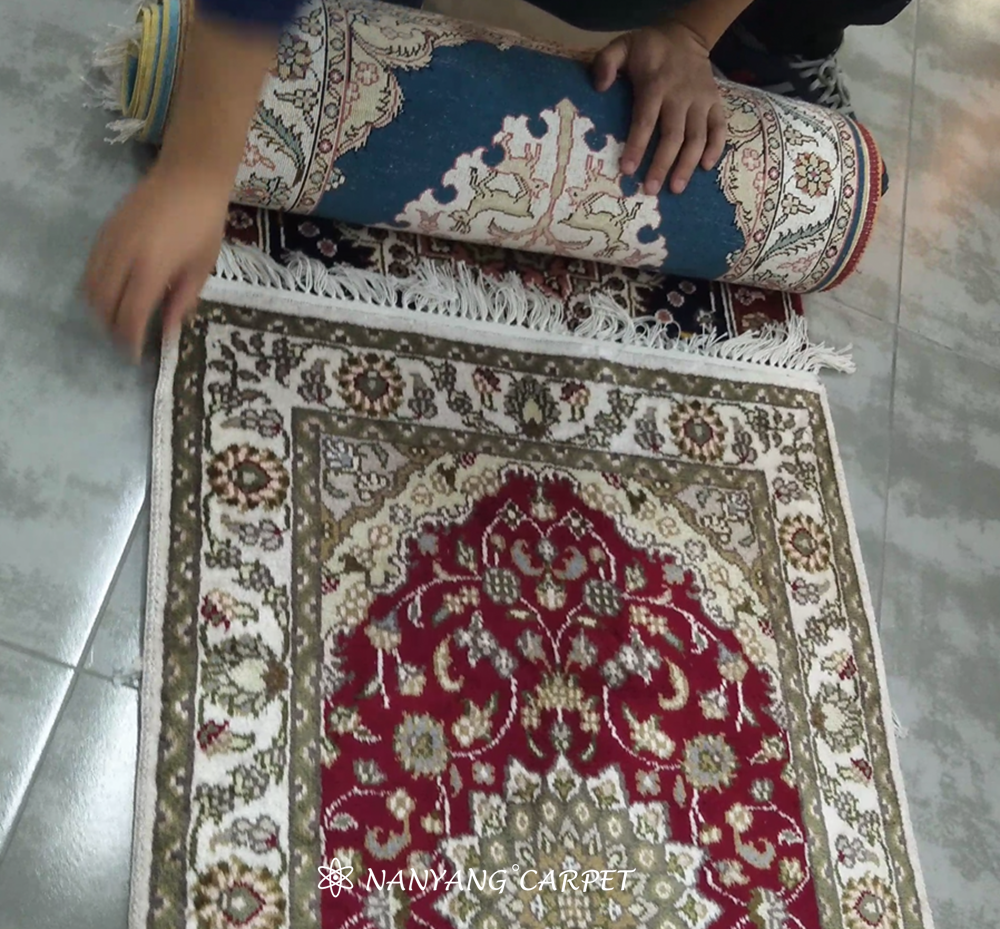
With the combination of the classic designs and excellent crafts, these pure silk handwoven Oriental rugs also give an artistic value for collection.
This article is written by Elly from Nanyang Silk Carpet Factory.
More information about our handwoven carpets,please open the following Google drive link:
Email:info@nanyangcarpet.com
www.nanyangcarpet.com
WhatsApp/Phone: +86 150 3823 8579
2018年11月30日星期五
Pattern Meanings in Chinese Antique Carpets
Some common patterns that came from the Chinese traditional auspicious motifs are usually used in Chinese antique carpets,such as phoenix pattern,Xiangyun pattern,fish pattern,water pattern and so on.
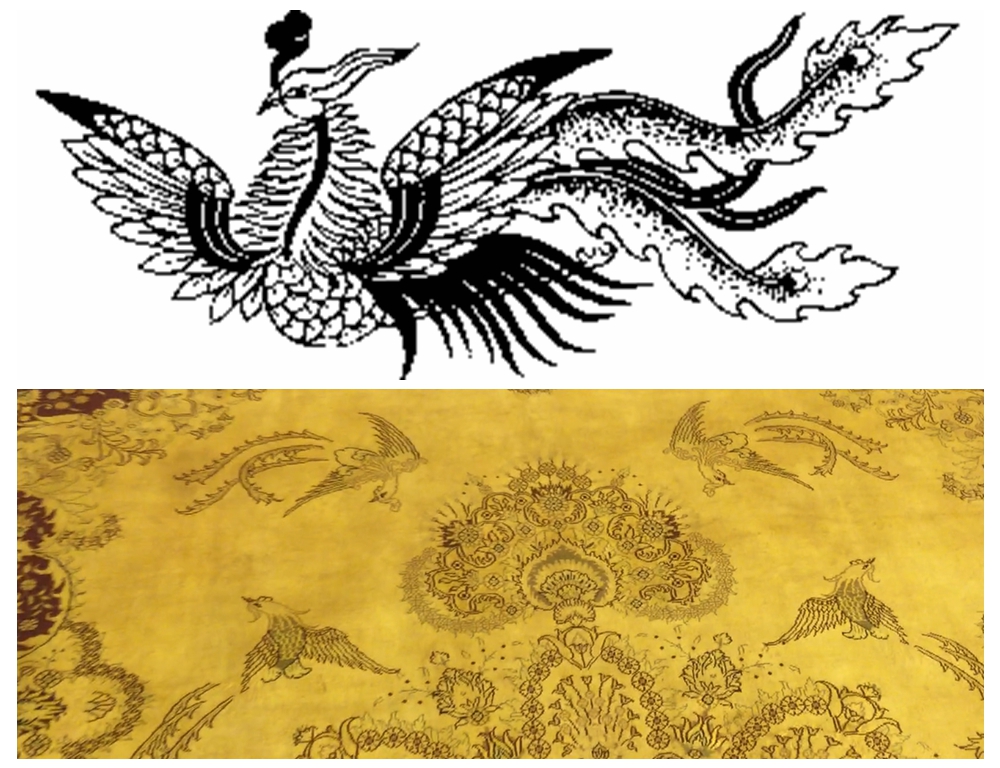
In Chinese traditional culture and art,the phoenix implies auspiciousness and peace,which also represents the power of women.And the phoenix is often combined with flowers.which is a symbol of happiness and harmony.
Xiangyun means auspicious cloud and also contains the meaning of harmony and auspice.
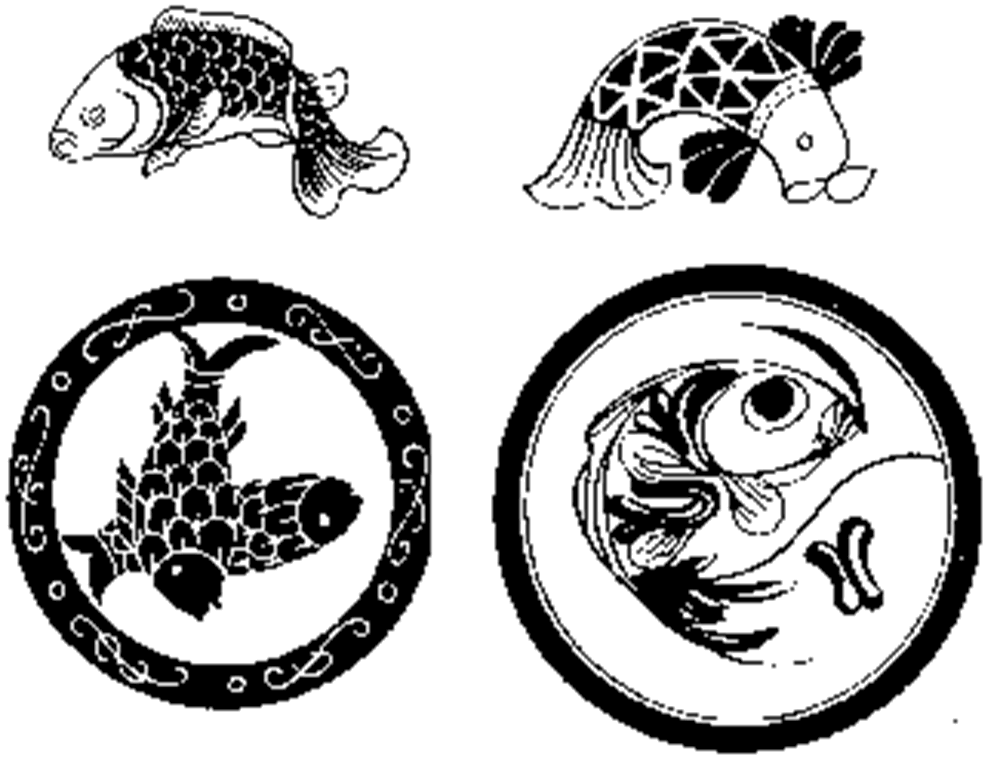
The fish design is a symbol of surplus in Chinese culture, another measure of a good year and a good life.The fish and water designs are symbols of prosperity and harvest.
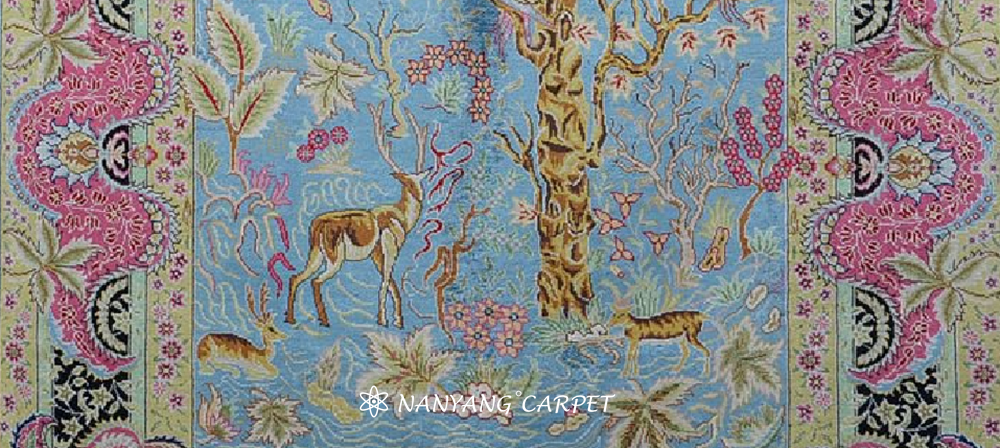
The deer design is the symbol of longevity and prosperity.
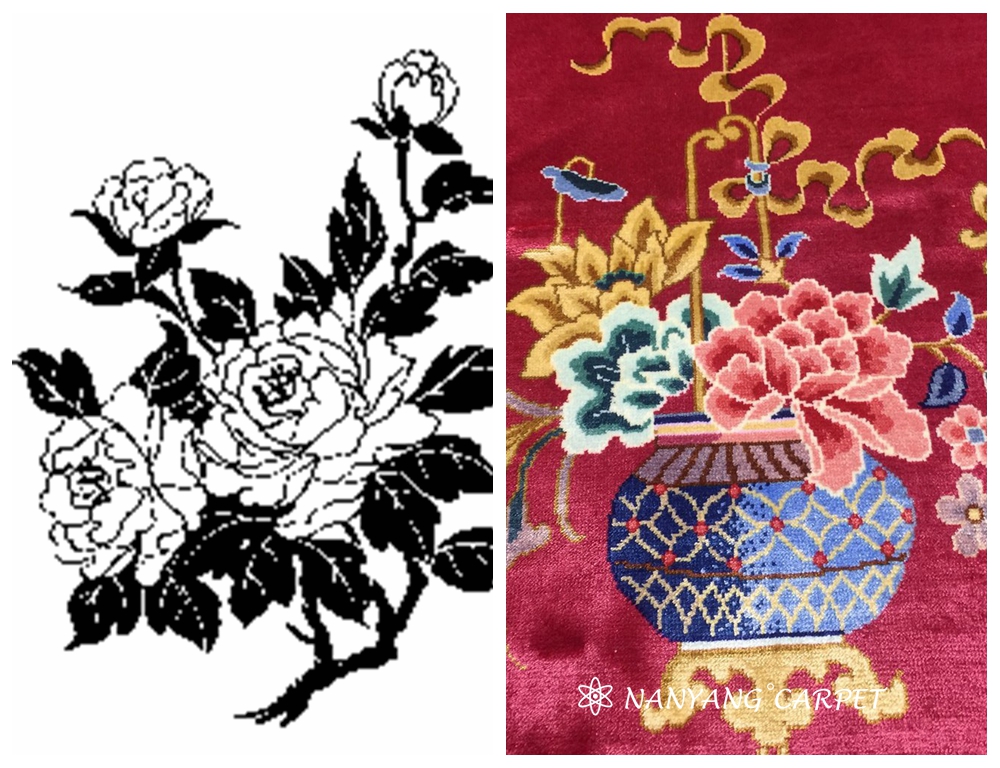
In addition,with the unique richness, luxury and prosperity, peony symbolizes prosperity, happiness and peace in Chinese traditional culture.
These traditional auspicious patterns are widely used in Chinese artworks.As handwoven artworks, handwoven carpets are no exception,such as hand knotted Antique Art Tapestry, Handmade Art Decor Rug.
This article is written by Elly from Nanyang Silk Carpet Factory.
More information about our handwoven carpets,please open the following Google drive link:
Tel/Whatsapp: +86 15038238579
Email:info@nanyangcarpet.com
www.nanyangcarpet.com
2018年11月28日星期三
Guide to Select Wool Rugs for Bedroom
We can place Area Carpet for bedroom according to our own need and preference. How to choose a wool beside rug,particularly traditional wool bedside rug? We can choose rectangular rug or runner rug.
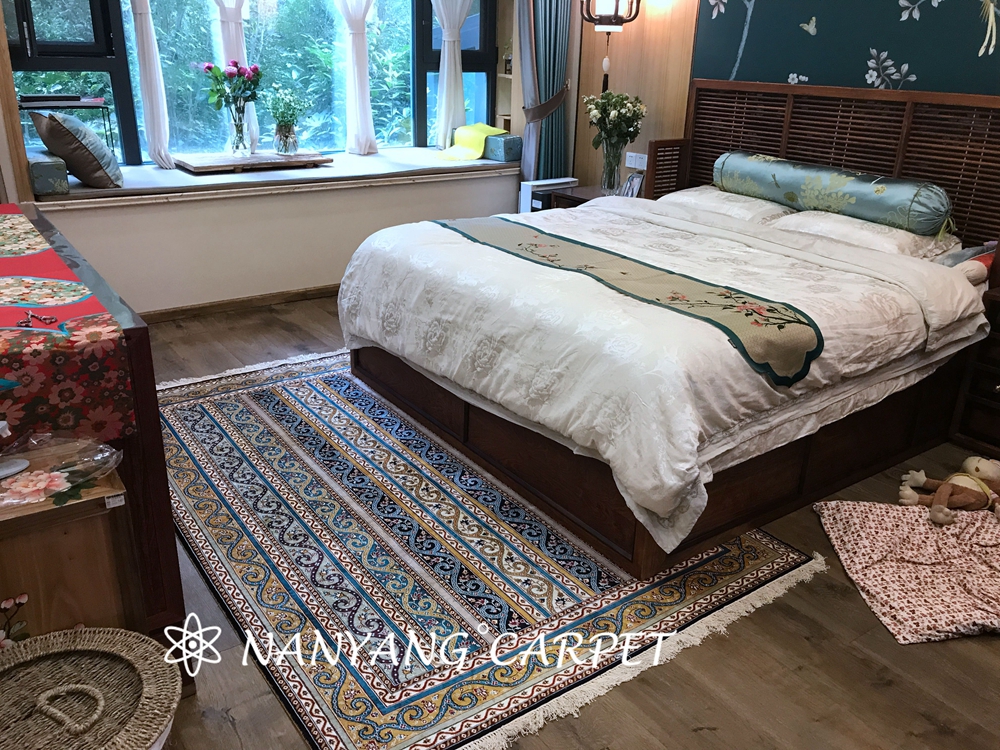
In general, the runner rug is a common bedside rug for more families.
The choice of bedside rugs depends on the size of the room and bed.The length of rug can be consistent with the bed,as well as reduce the length of the bedside table.The width of rug can be slightly wider than the bedside table.
Share some traditional wool bedside runner rugs.
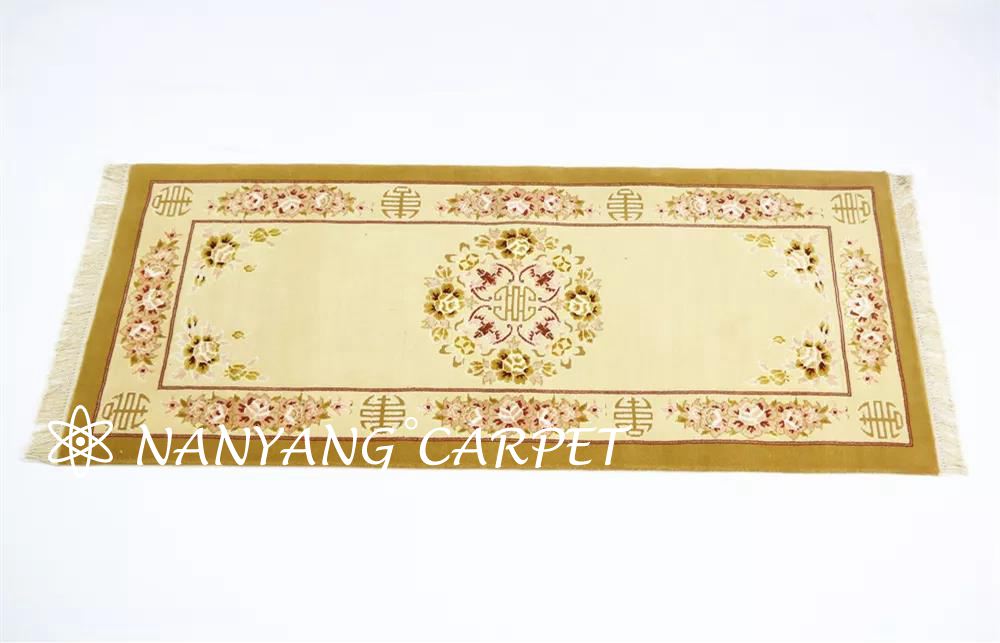
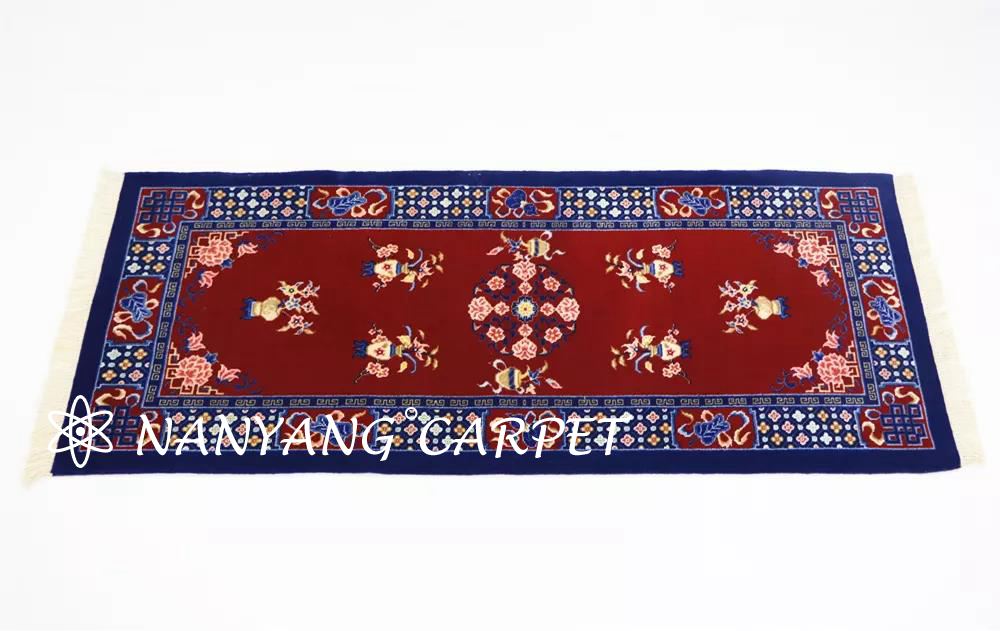
The designs of the 2.5x6ft( x183cm) bedside runner rugs belong to the Chinese freehand style,which are traditional Chinese auspicious patterns . Our designer combines freehand and realistic in design , so that the whole design is full of realistic magnificence and dreamy imagination, making the oriental elements and Chinese aesthetics fit the eyes and needs of modern people.
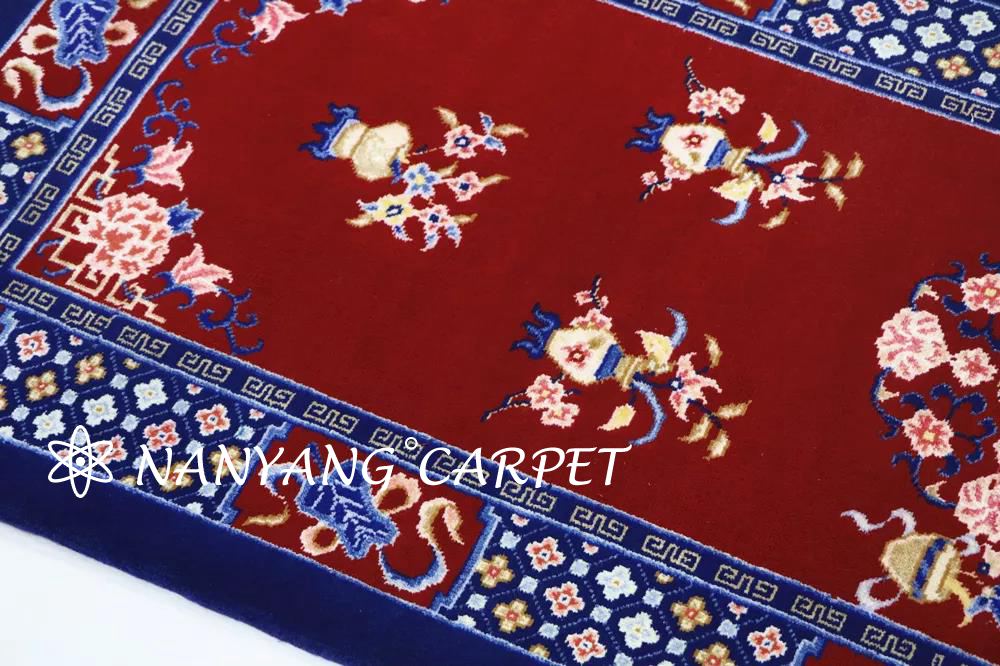
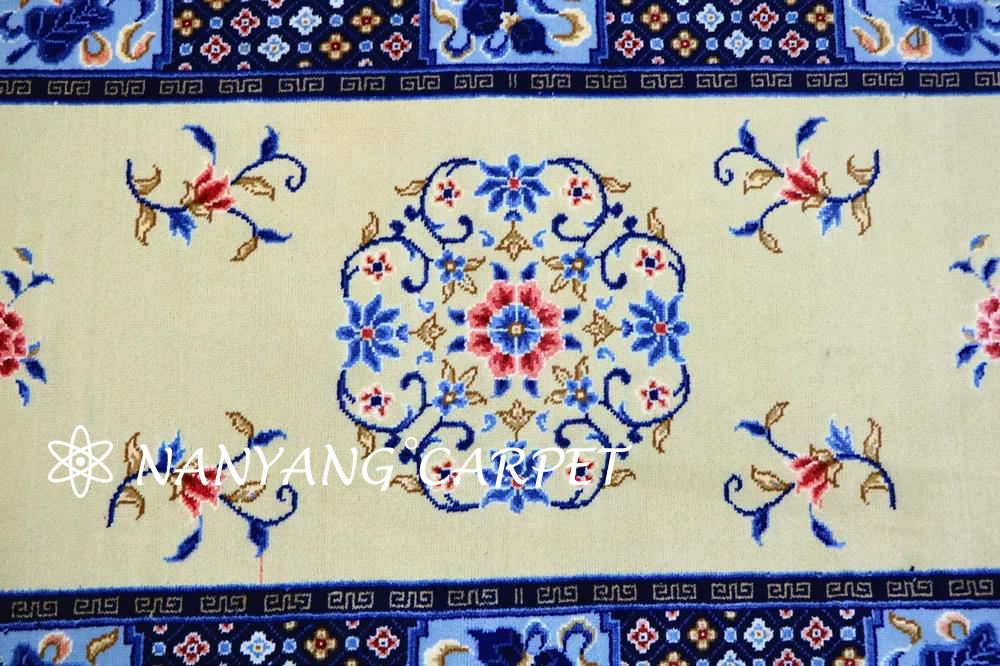
Place this kind of warm handwoven traditional Wool Carpet in the bedroom to live a more comfortable life.
This article is written by Elly from Nanyang Silk Carpet Factory.
More information about our handwoven carpets,please open the following Google drive link:
Tel/Whatsapp: +86 15038238579
Email:info@nanyangcarpet.com
www.nanyangcarpet.com
2018年11月21日星期三
Tree of Life Design Handwoven Iranian Rug to Sweden
A customer from Sweden purchased a 3x4.5ft(91cm x137cm) handwoven silk Iranian Rug with Tree of Life Design a few days ago.
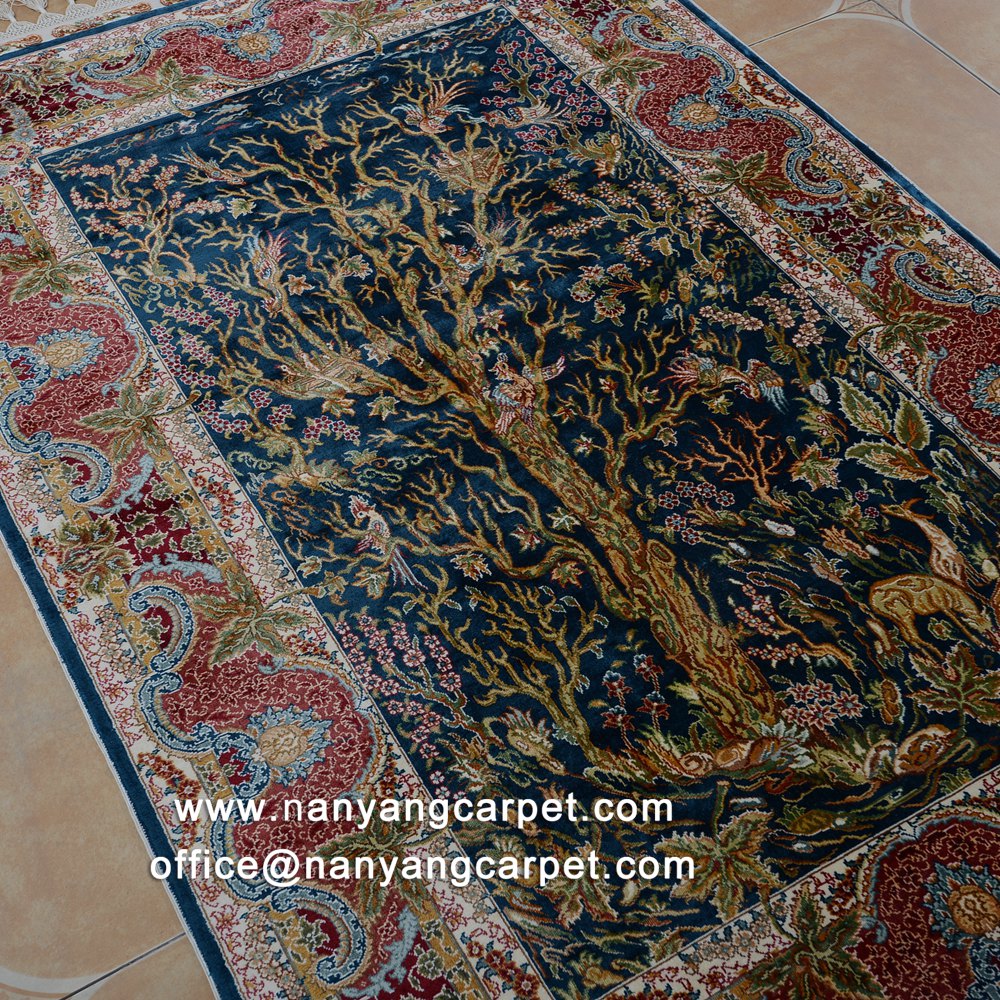
This hand woven Iranian rug is made of pure silk,and it took our one girl weaver 5 months to complete it. The real hand knotted Iranian Silk Rug is not only commodity, but also crafts.
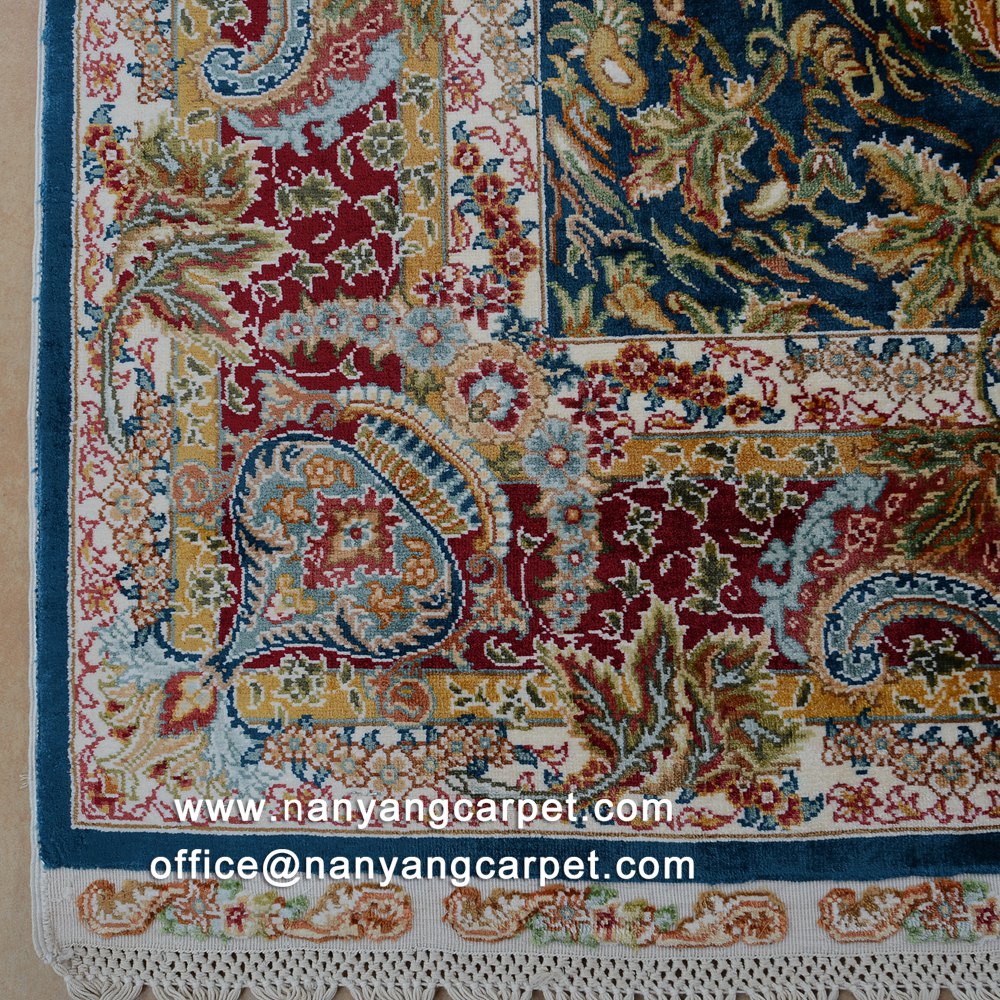
Our customer will receive the silk hand knotted rug about 5 days later.Expect our customer to touch the hand knotted silk rug and feel its beauty and fineness.
This article is written by Elly from Nanyang Silk Carpet Factory.
More information about our handwoven carpets,please open the following Google drive link:
Tel/Whatsapp: +86 15038238579
Email:info@nanyangcarpet.com
www.nanyangcarpet.com
2018年11月14日星期三
What's Indian Carpet ?
The rug industry survived the decline of the Mughal dynasty. Now Kashmir (a region of South Asia, about 2/5 weakly controlled by Pakistan and the rest controlled by India) is the leader of the Indian Carpet industry. The origin of the Kashmiri carpet dates back to the 15th century.
Kashmir Carpet with garden design
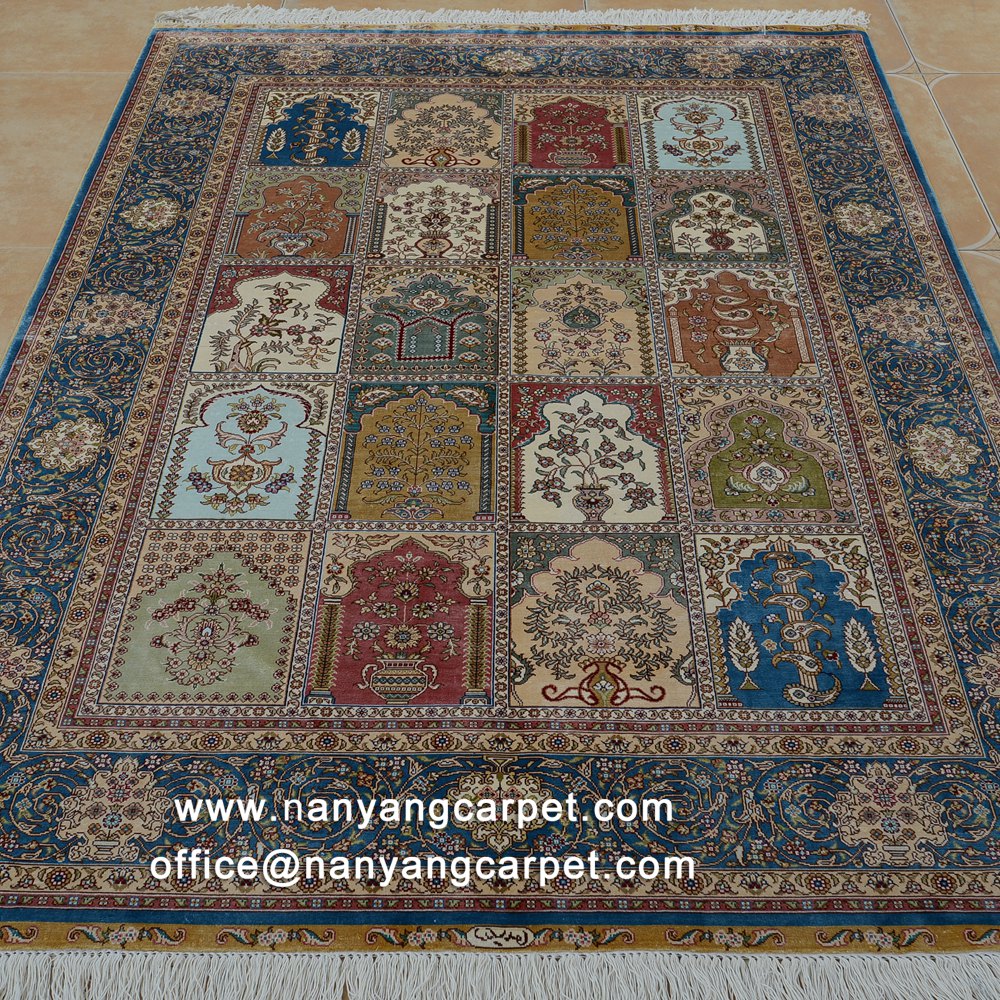
According to Kashmiri history, King Kashmir Zain-ul-Abedin brought back the craftsmen from Persia to teach the carpet weaving skills to the local craftsmen of the Kashmir Valley, while the local craftsmen were already mastered the crafts of the famous Kashmiri textiles. In the 15th century, he introduced Kashmir to the complete assembly line of carpets from weaving to cutting and cleaning. Due to his interest in the carpet industry, the Kashmir carpet industry was booming during this period.
Oval Blue Carpet

However, after this boom, the Kashmiri carpet industry was severely frustrated until the Mughal dynasty.
In the mid-18th century, the Dogras family ruled Kashmir, and the then ruler Maharaja Ranbir Singh showed a relatively strong interest in Kashmiri carpets. During this period, the production and quality of carpets have made great progress. At the time, Kashmiri carpets were well known and it even became one of the few treasures given by the king. It is only found in the royal family and the royal palace in India and Central Asia.
Large carpet
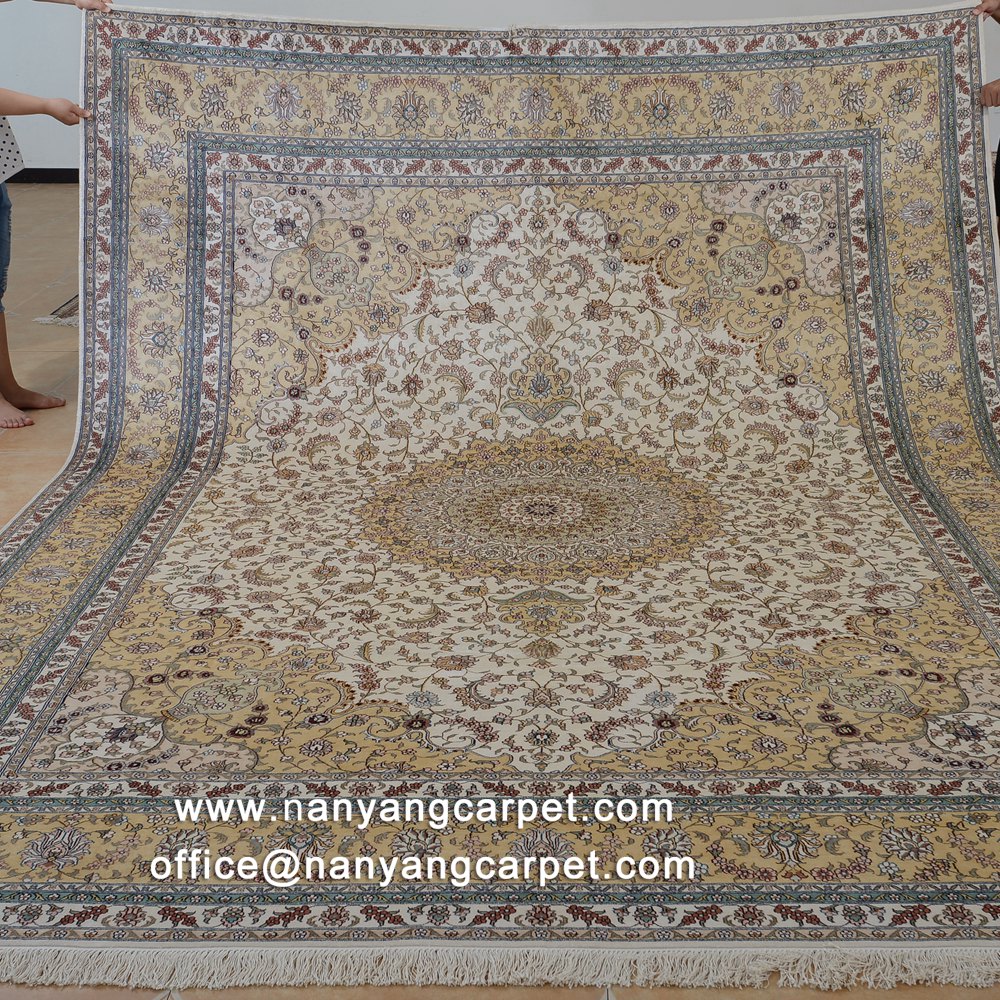
In the early 19th century, Kashmir rugs emerged in the international market and immediately gained international attention. Kashmir also became one of the best sources of hand-woven rugs in the world. Many European companies, like The East India Co., have a great interest in the carpet industry here and have quickly built factories in Kashmir. In this way, the mass production and export of carpets began, and it continues to this day.
Round Red Indian Carpet
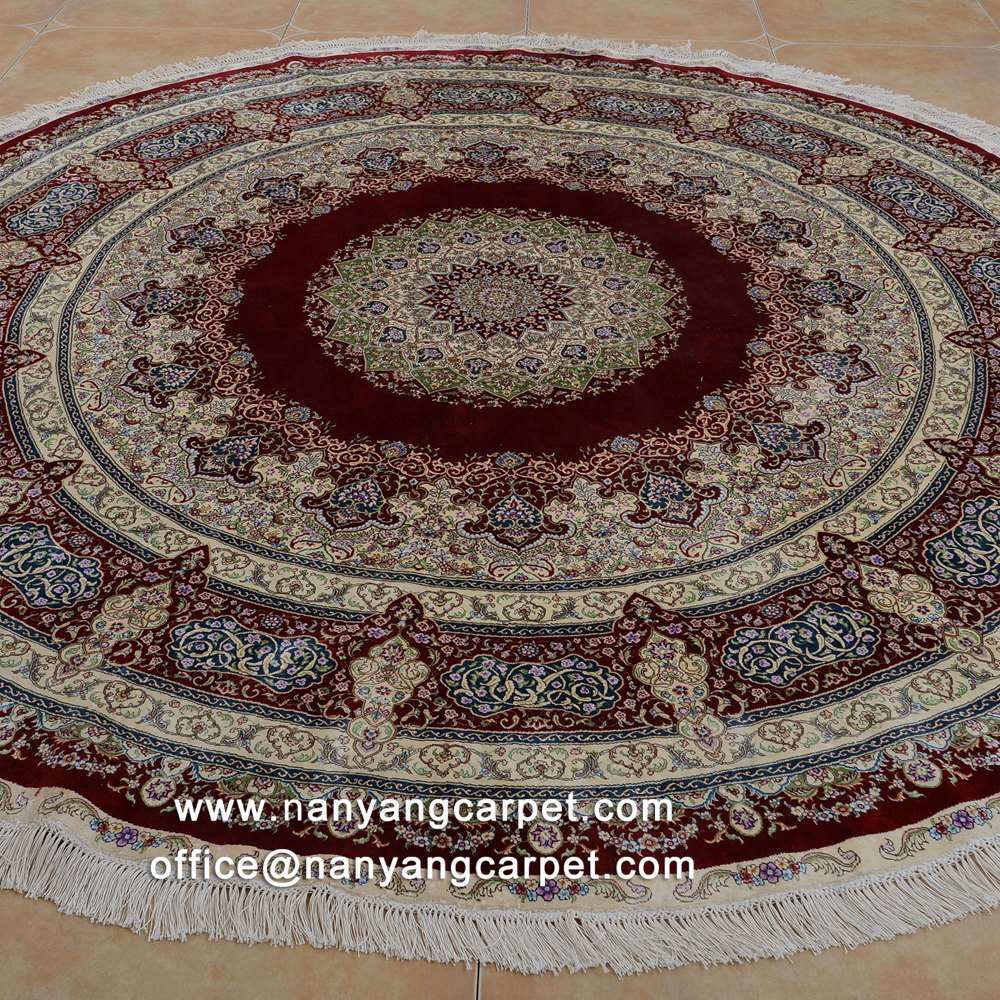
The color of the Kashmir carpet makes it extremely distinguishable from other carpet varieties. Kashmiri carpets are light in color, less noticeable, and never stand out in bright colors. The yarns of Kashmiri carpets are dyed with plants and other natural colors. The material of the yarn is mainly cotton and silk, or a combination of the two. The most common is the cotton Silk Carpet. Silk Carpets usually have some cotton filaments inside. Although silk carpets often form the essence of the industry, cotton blankets are still much more common, mainly because their prices are relatively more advantageous.
Light Color Indian Carpet

Like the Persian blanket, the durability of the Kashmir blanket is also determined by the number of knots, and of course the number also determines its price. Another point that is also worth noting is the choice of color and design. Indian carpets often have single-sided knots and double-sided knots. Single-sided knotted carpets are generally more fluffy and softer than double-sided knotted carpets.
The back side of Handmade Silk Carpet
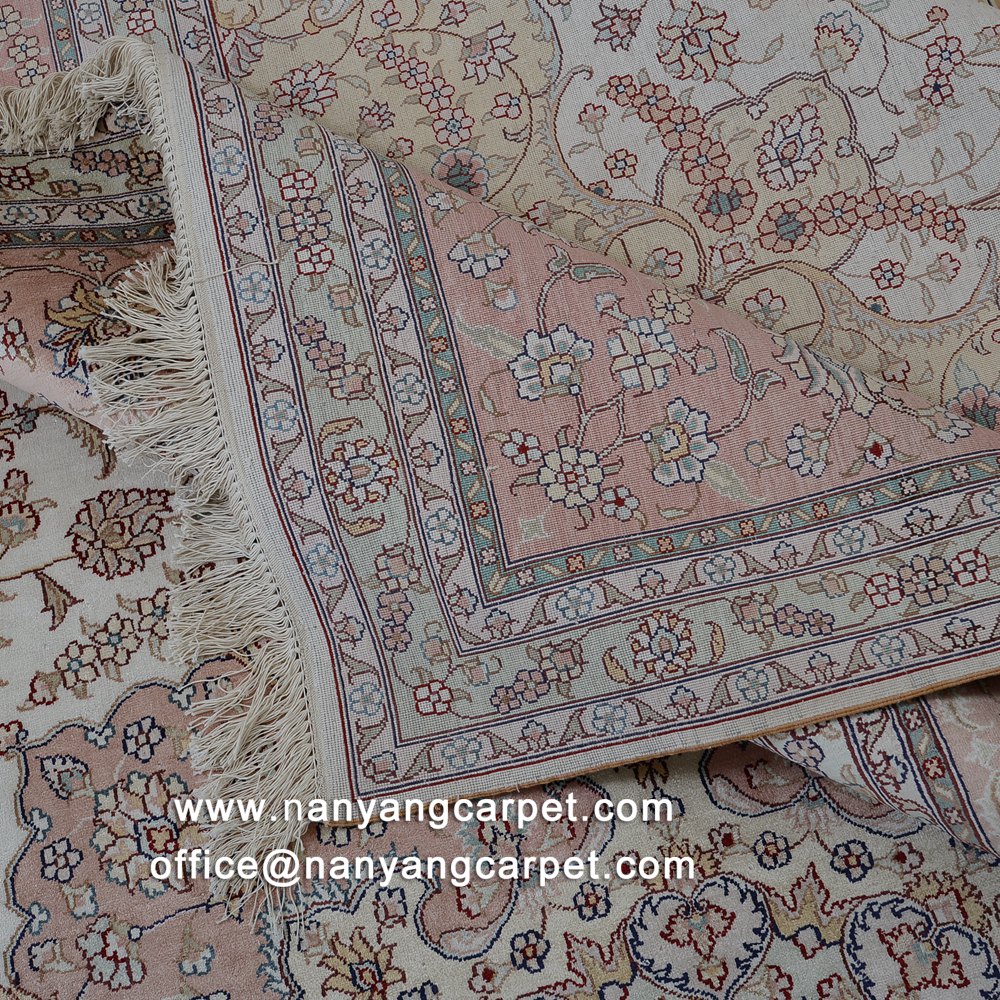
The special feature of the common Indian carpet is its elegant design, unique graphics, color matching and the quality of its materials. These characteristics make Indian carpets stand out in the world carpet industry.
Indian rugs are as durable as Persian rugs. After all, it was originally how the Persian church Indian craftsmen woven carpets, which is why today's Indian rugs and Persian rugs are as precious. Many people will buy an Indian carpet as an investment and use it as a lifetime of wealth.
www.nanyangcarpet.com
Email: office@nanyangcarpet.com
WhatsApp/Phone: +86 150 3823 8579
2018年11月7日星期三
How Much Do You Know About Nanyang Rug
The city of Nanyang, in central China's Henan Province, is one of the world's largest producers today,which is as a small Chinese city selling handwoven rugs to the world.
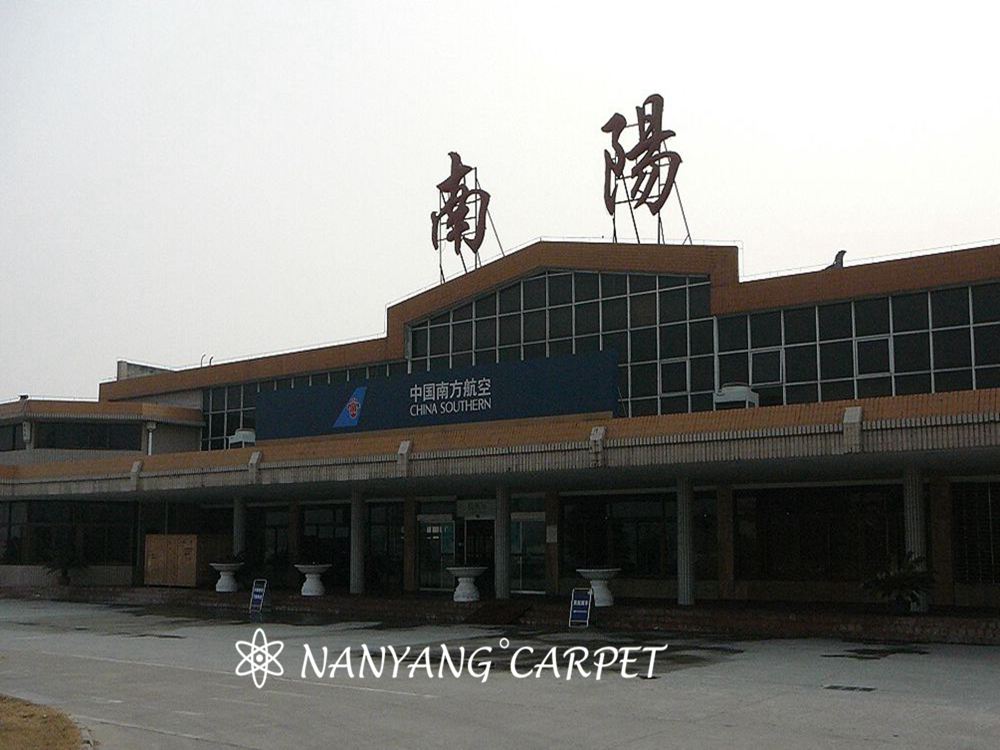
The Nanyang area of China is rich in silk, which is called the hometown of silk. The history of carpet production is also very long, especially Silk Carpets, and high-density silk carpets, which are specialties of Nanyang.Nanyang has become the world's largest production base for Handmade Silk Carpets, and produces 80% of the world's high-count silk carpets every year.
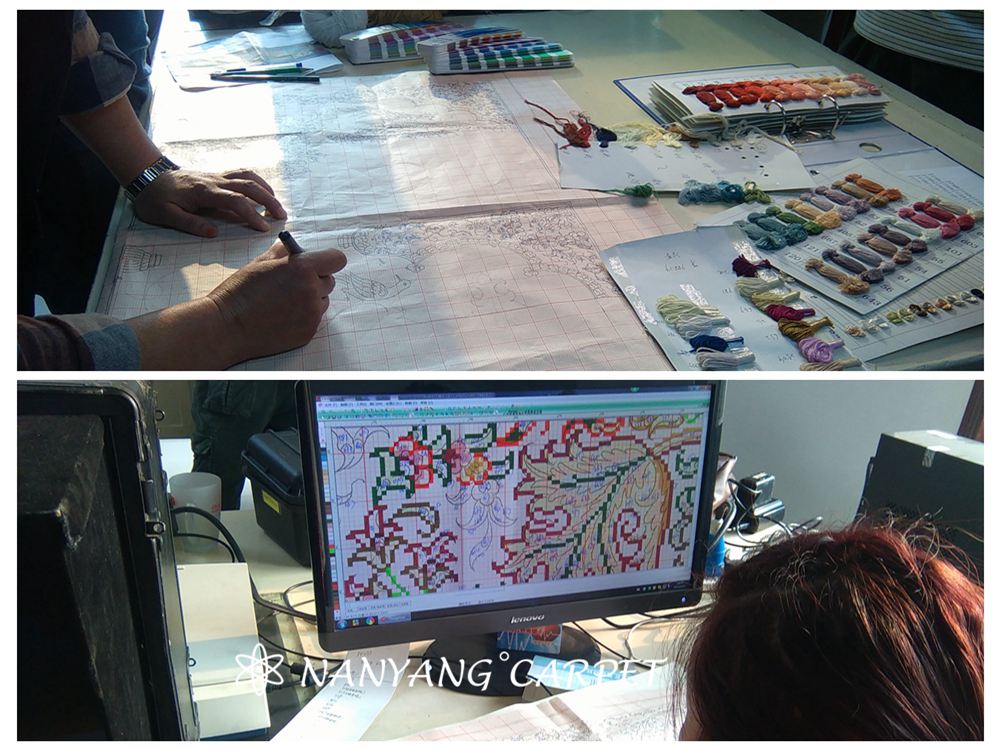
Silk carpets and rugs from Nanyang are with thousands of designs, novel styles, fine workmanship and high quality.
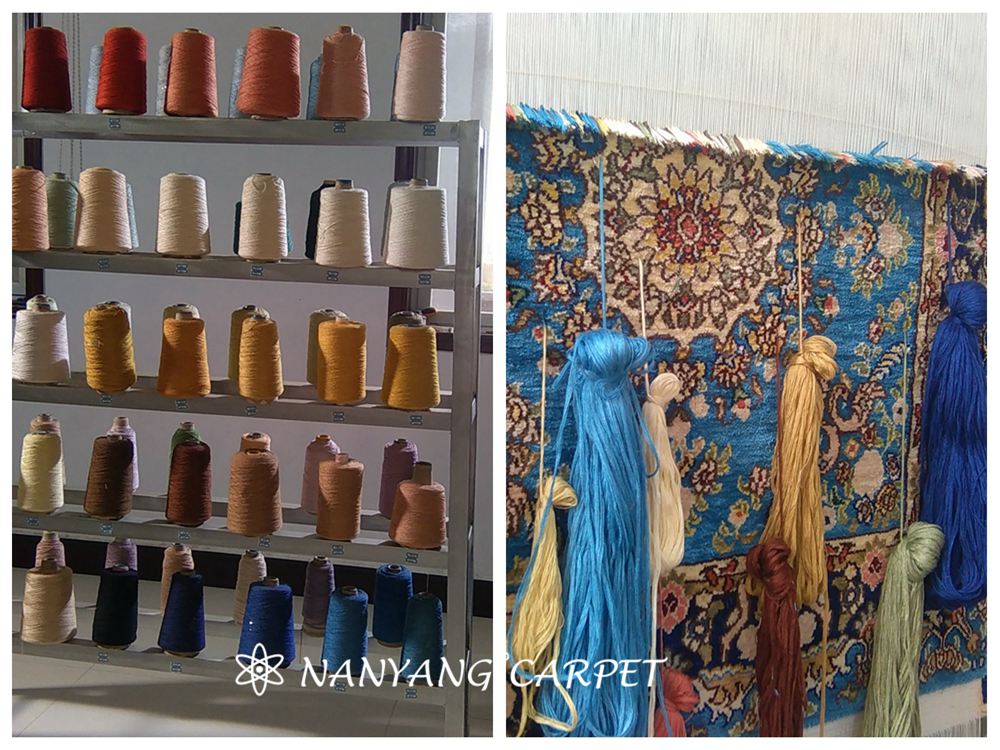
In 1971, Premier Zhou Enlai ordered the production of handmade products for export. At this time, Nanyang responded to the call and began to produce handmade silk carpets using the local long-standing advantages of silk production.From the early 1970s, Nanyang silk carpets began to develop. In addition to the carpet factory producing carpets, local farmers in Nanyang will also use the carpeting time to weave carpets. In 1974, there were about 140 woven carpets and 750 weaving workers among the farmers in Nanyang. By 1988, the local area had grown to 20,000 machine beams, and the weavers weaving carpets had grown to hundreds of thousands. It can be seen that the prosperity of Nanyang silk carpets at that time.
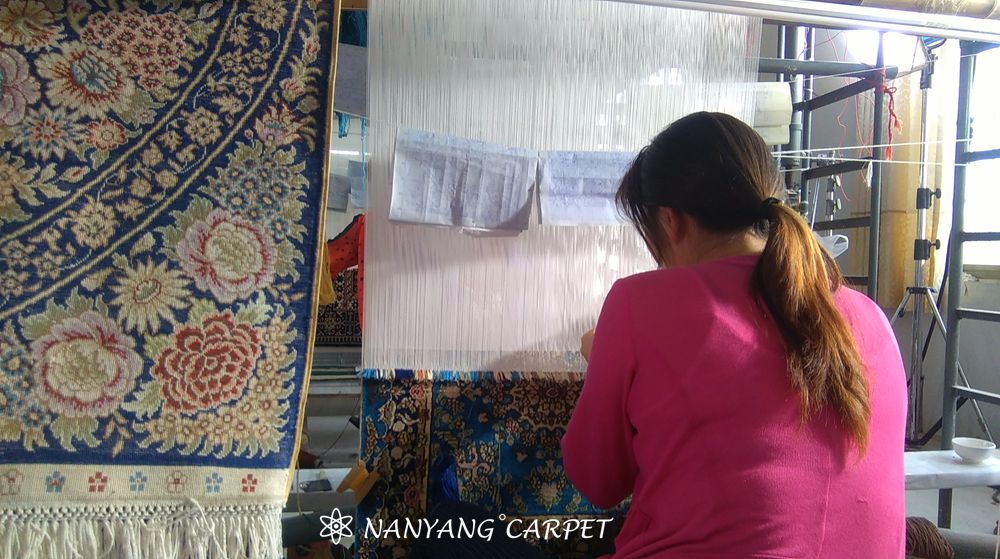
Until today, Nanyang Rug has occupied 80% of the global hand-woven Silk Carpet production. "Nanyang Silk Rug"or "Nanyang silk carpet" has been the highest quality standard for international silk carpets. As long as the Nanyang silk carpet is mentioned, it represents the best hand-woven silk carpets, therefore, a large number of foreign customers import silk carpets from Nanyang and buy and sell internationally.
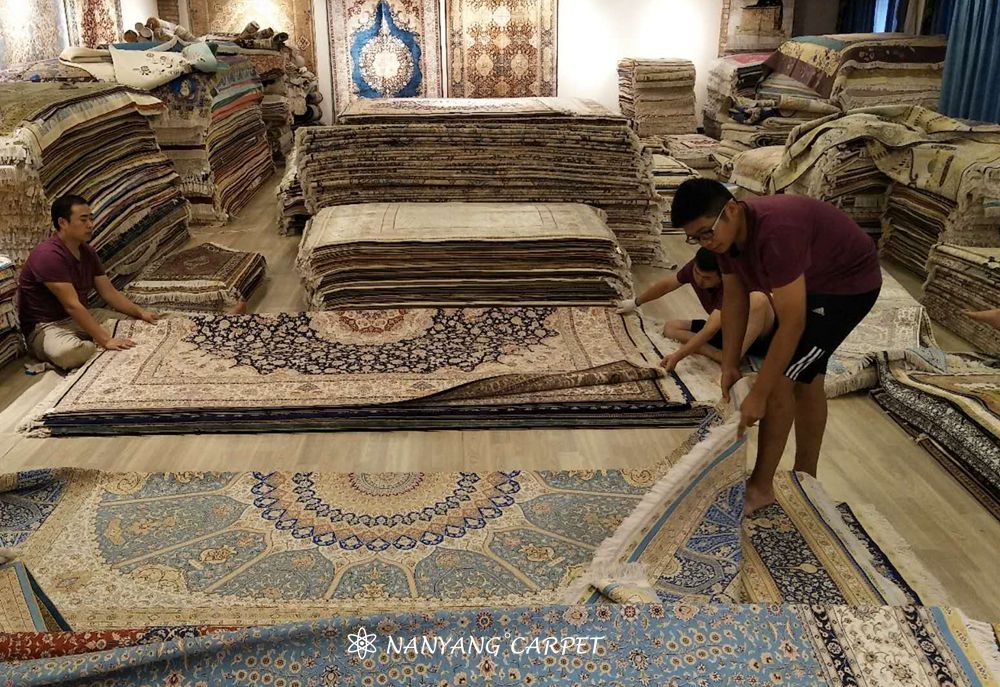
Nanyang Silk Carpet Factory are the professional handwoven carpet producer and exporter, mainly supplying handwoven silk carpets and wool silk mixed carpets.Both wholesale business and retail business are acceptable. Usually,we deliver carpets to our customers by express. The delivery time is 5-7 days, and it is door to door service, it is very convenient.Welcome to do business with us.
This article is written by Elly from Nanyang Silk Carpet Factory.
More information about our handwoven carpets,please open the following Google drive link:
www.nanyangcarpet.com
Tel/Whatsapp: +86 15038238579
Email:info@nanyangcarpet.com
2018年10月30日星期二
Tips for Choosing a Fine Pure Silk Handmade Rug
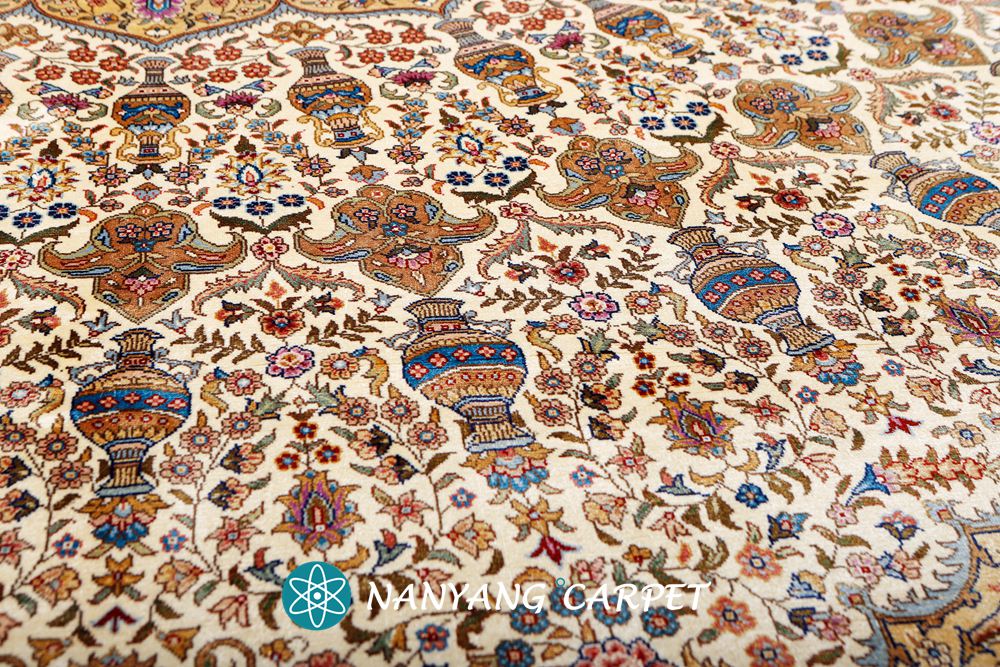
Pure silk handmade rugs with excellent workmanship,attractive design and various colors are intelligent classics,which are also a kind of artistic expression and craft inheritance.How to pick a fine pure silk Handmade Rug?

Firstly,look at the pattern of handwoven rug. Each hand woven Silk Rug is an artwork, and the details of the pattern are of worth noting - the color should be harmonious and pleasing, the size of the flower should be the same, the vine line should be delicate, but the overall feeling is more important.Love at first sight, it will be right.
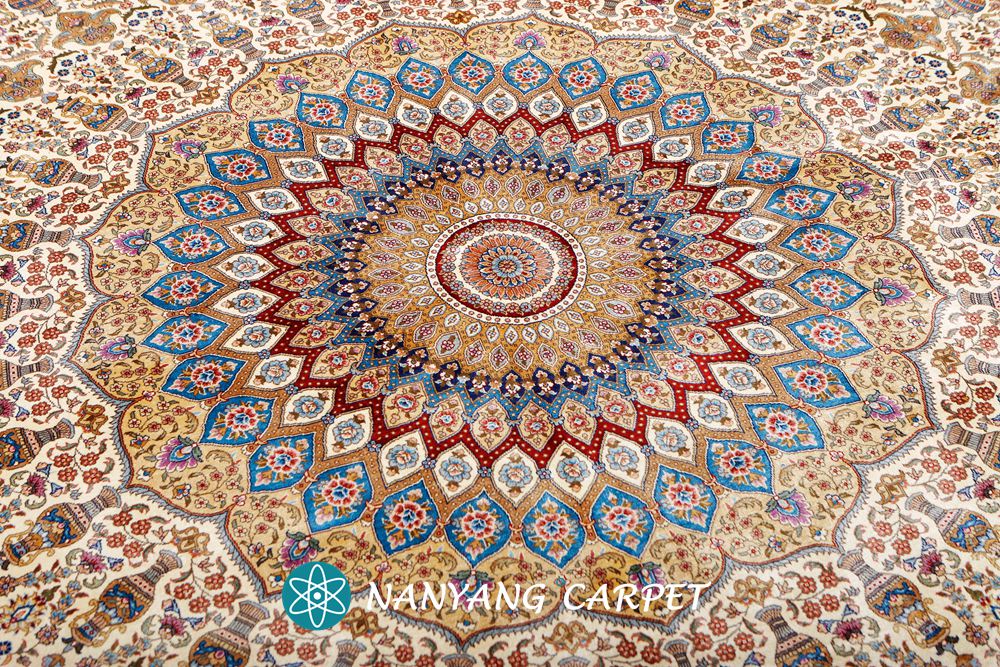
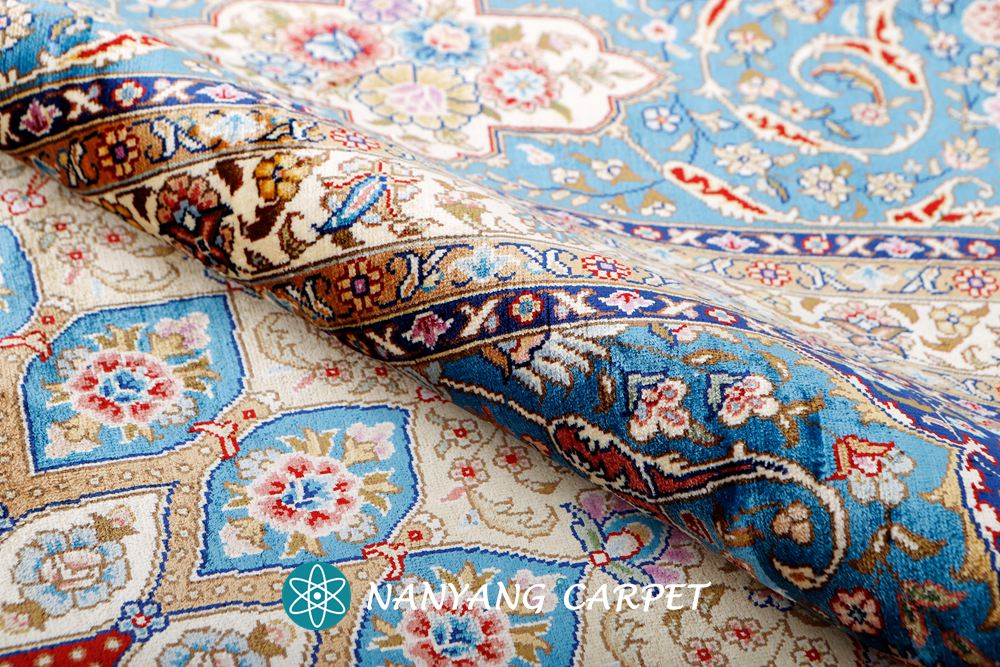
Second,Look at the number of knots.Turn over to the back of the hand knotted rugs and count the number of knots per square centimeter. The denser the knot, the more knots, the better the handwoven carpet quality. Ordinary household hand woven Silk Rugs generally have 57-96 knots per square centimeter, and the top-grade carpets can reach 1076 knots. However, the top grades are generally collected in museums, which are expensive and generally not seen by ordinary people.
Third,look at the materials. Hand knotted carpets are time-consuming and labor-intensive, weaving one rug, and sometimes it takes several months, even several years. Therefore, in the selection of raw materials, it is very careful, generally using silk or wool. Silk can be made into a high-density handmade rug, and wool can only be made into a low-density handmade rug. In the market, the price of handmade wool rugs is generally only two-thirds of the price of Handmade Silk Carpets. However, the wool rugs is thicker and rougher.The Silk Carpet is thinner and more graceful.
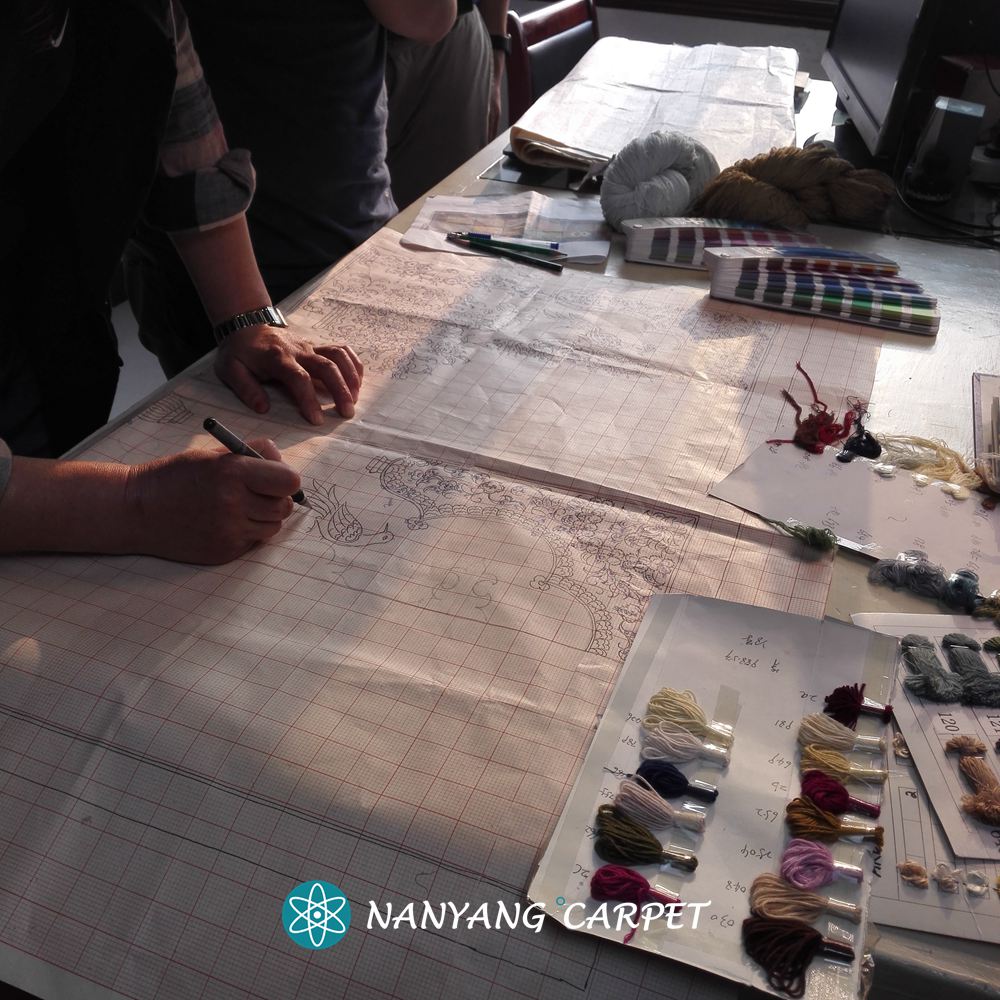
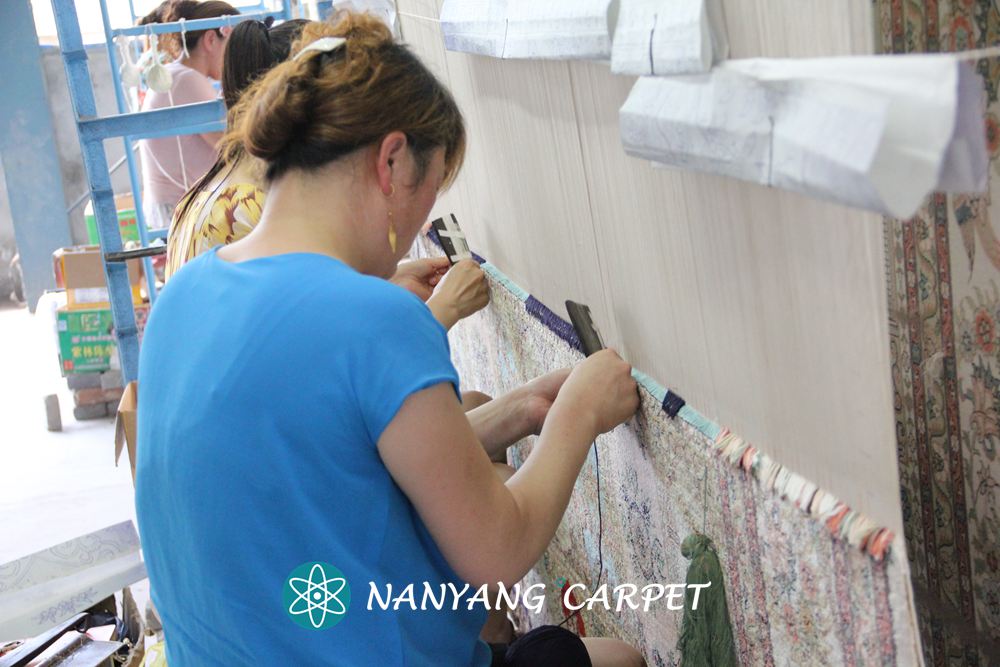
Fifth,look at weavers. The best age for women workers who weave handmade Silk Carpets is 35-45 years old. Too young, the knitting technique is not mature enough, and it is inevitable that there will be defects on the carpets. The age is too big, the eyesight and physical strength are falling, the hand strength is not enough, and the perfect carpets cannot be woven. The best weavers who can weave fine silk carpets are mostly 35-45 years old.
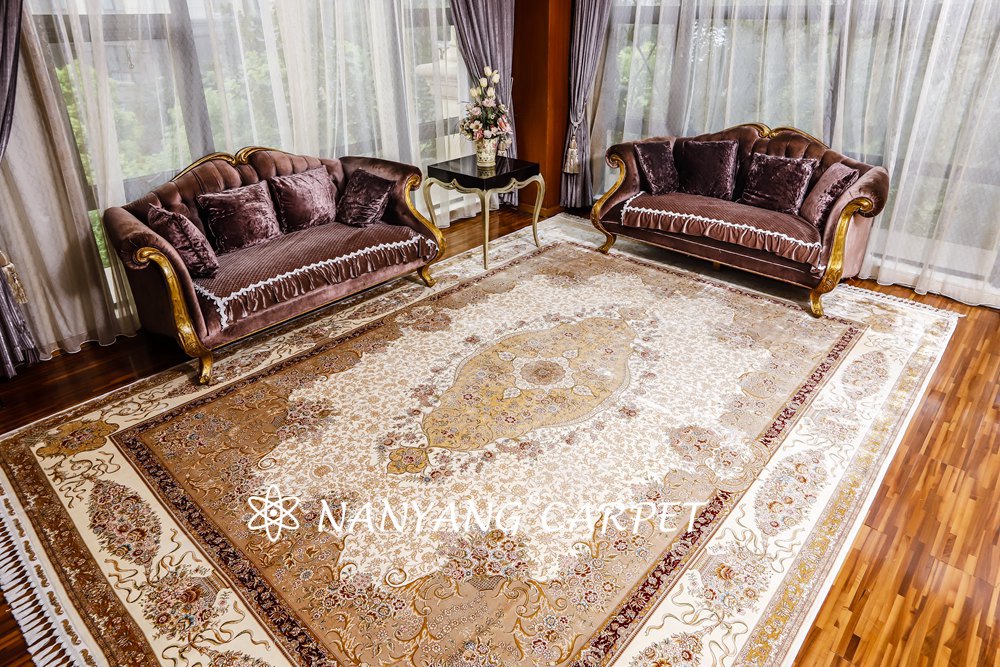
Fifth,look at the year.The longer the time, the greater the appreciation space of the handmade silk carpet, and the color of the old handwoven carpets is more charming than the new handwoven carpets. If you have enough budget, buying a century old antique carpet, whether it is collection appreciation or investment, will not let you regret.
Sixth,look at the price. In the past sixty years, hand woven silk weaving has formed a climax in China.Nanyang City,China produced a handwoven silk carpets with high lines, accounting for more than 95% of the world, was exported to Turkey ,Iran and other countries. Then,these handwoven silk carpets from Nanyang used as Persian silk carpets were sold to merchants around the world by Iranian ,Turkish merchants. China's export prices are generally between RMB 6,000 and RMB 10,000 per square meter. Iranian and Turkish businessmen speak the story of the Arab flying carpet. The resale price is generally about RMB 120,000-300,000 per square meter. Therefore, a large number of handwoven silk Persian Carpets,which are bought by rich Chinese from overseas, are actually from China. Its real value is 6k-10k per square meter.
This article is written by Elly from Nanyang Silk Carpet Factory.
More information about our handwoven carpets,please open the following Google drive link:
Tel/Whatsapp: +86 15038238579
Email:info@nanyangcarpet.com
www.nanyangcarpet.com
2018年10月21日星期日
Hand Woven Indian Rug Online
The Indian woven carpets were originally derived from the traditional style and design of Persia. Later, it gradually incorporated into Mongolia and India's own art.
Indian carpets are recognized as the most traditional and complex. As India's carpet industry grows, it gradually has its own brand. The Indian Carpet is known for its exquisite patterns, stunning colors, exquisite craftsmanship and elegant design.
Red Indian Carpet

As we all know, India's carpet weaving process began in 500 BC, and weaving mats and carpets were created during the ancient Indian civilization.
However, the true Indian carpet industry began in 1500 AD. At that time, Indian society was in the period of Akbar (the Mughal Emperor of India (1556-1605), conquered most of northern India and promoted religious tolerance policy). At that time, Akbar captured many Persian craftsmen and brought them back to India to settle down. So the original weaving of the carpet originated from Persia, and it was gradually incorporated into Indian art. Therefore, the carpet produced at that time was the typical original Indian carpet.
Blue Indian Carpet

Subsequently, the Indian carpet industry began to diversify and was widely circulated throughout India.
At the earliest time, the basic raw materials for carpets were silk. Of course, carpets of different grades or uses were made of different types of silk. The patterns on the Silk Carpet are generally known as flowers, reptiles or birds.
flowers and birds design rug
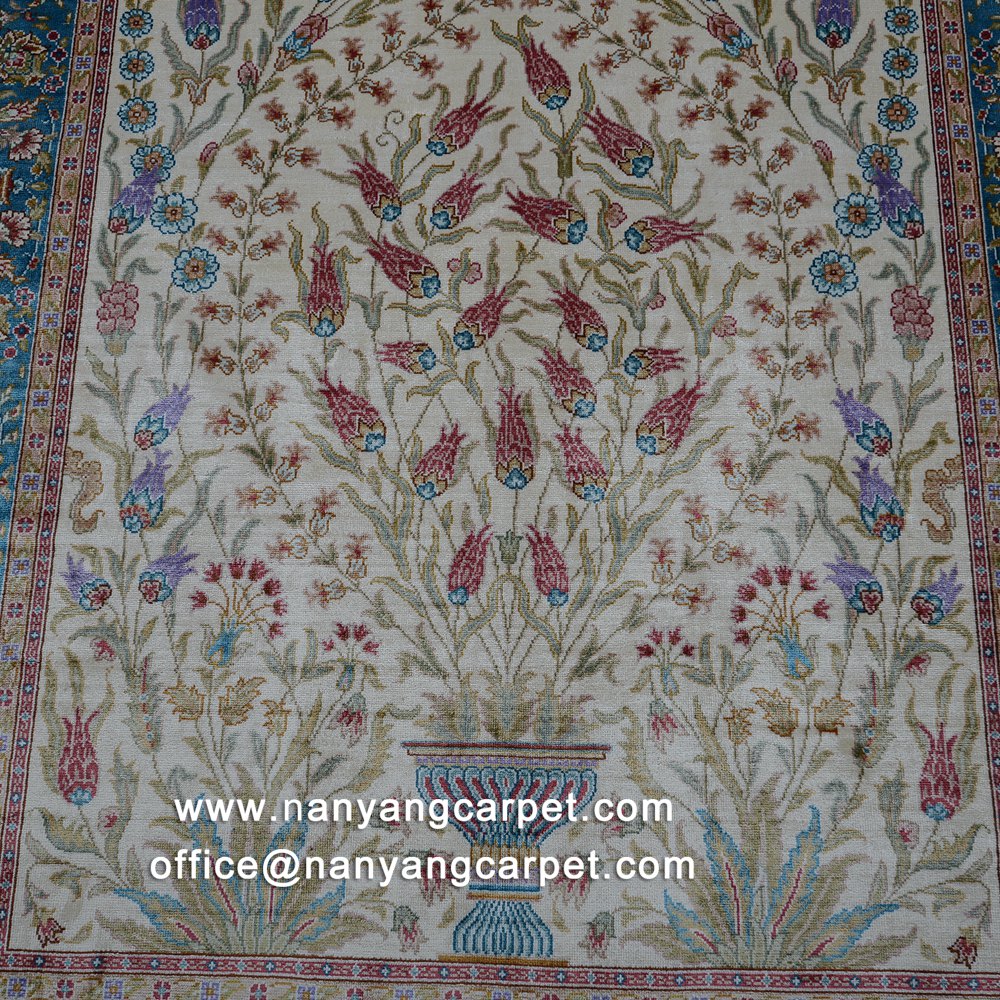
The rug of the Akbar period has begun to use a weave of cotton and silk mixed, and has a blue, green or other color on the red background. These ancient Indian rugs originally used the Persian style, and the latter were mainly Indian style.
Blue on red background
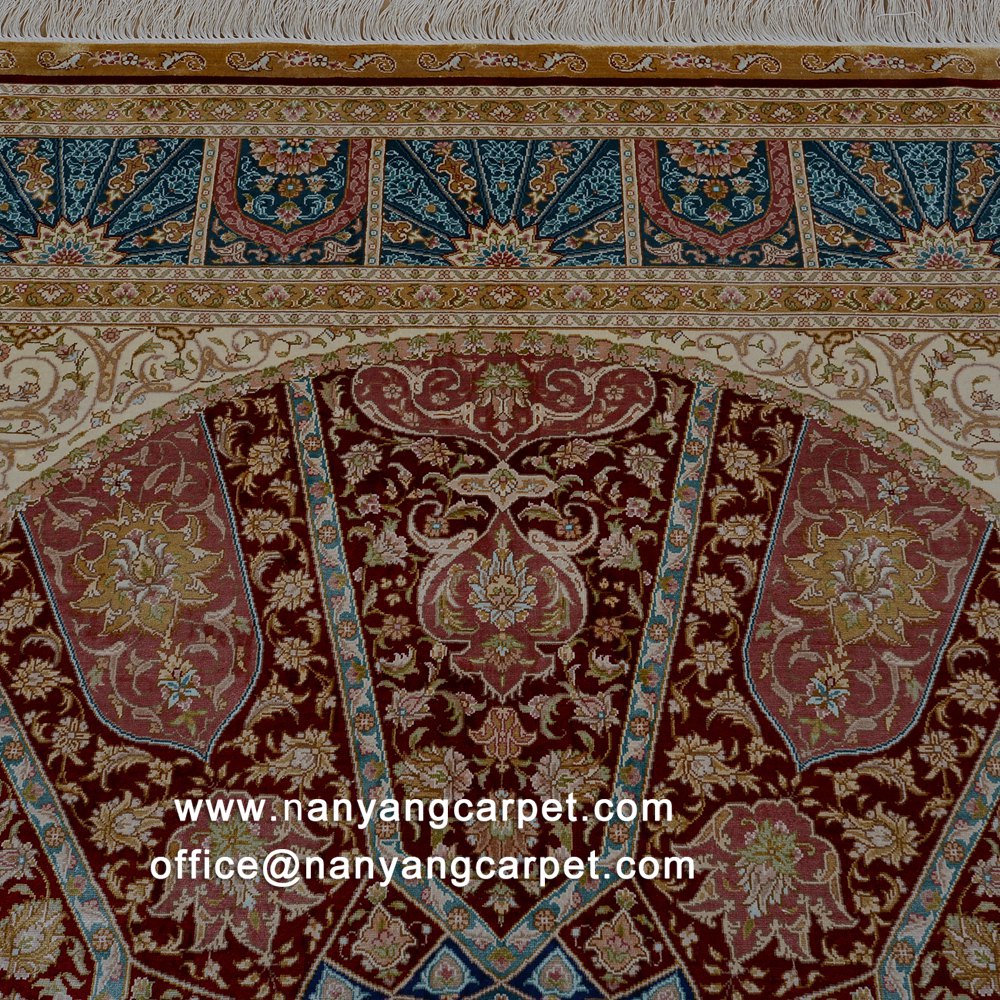
In the era of Jahangir (the emperor was reigned from 1605 to 1627), Indian carpets have improved in production and design. The materials used have also changed. The most popular material at the time was Pashmina, a cashmere that could be knotted on the back of the carpet to hold the fluff on the back of the carpet.
Therefore, the details of the operations that can be performed on the carpet are increasing. Smaller patterns, floral patterns, and even watercolor paintings appear on Indian carpets.
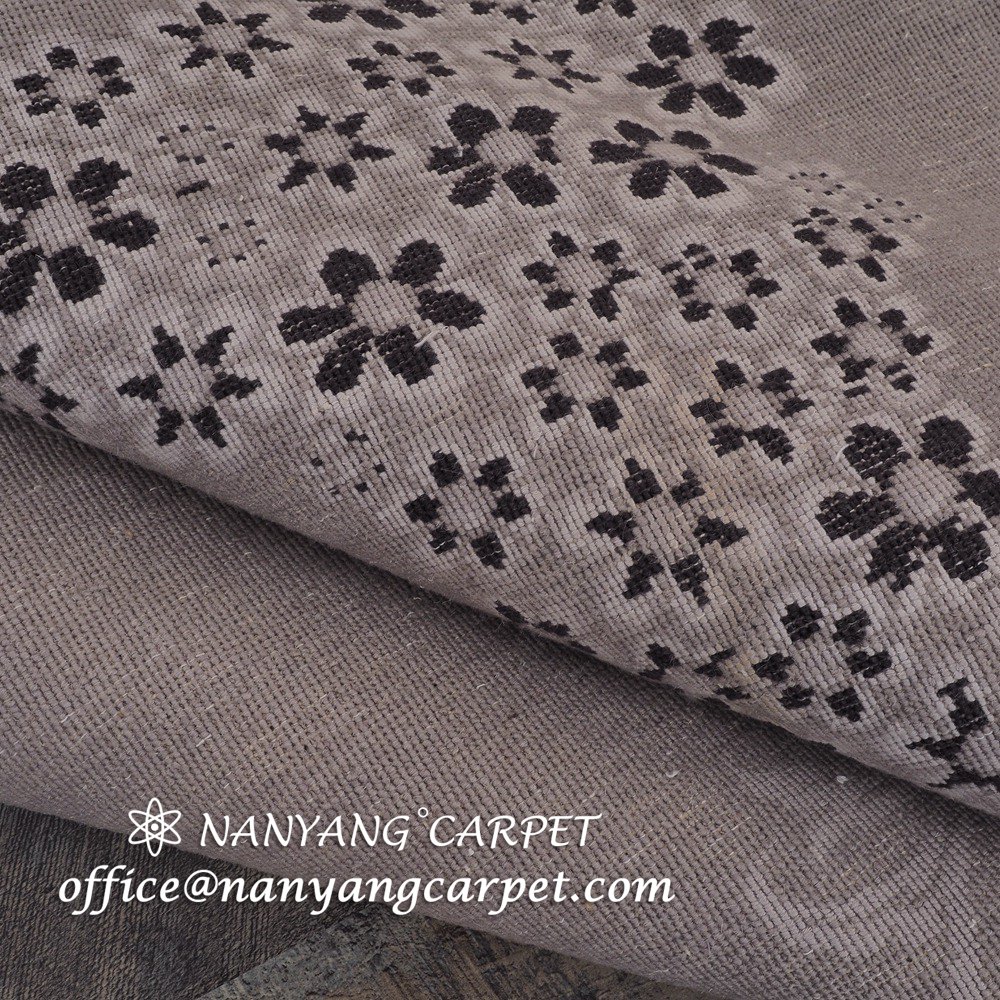
During the period of the Mughal Dynasty`s fifth-generation emperor Shah Jahan (the world heritage Taj Mahal was Shah Khan`s mausoleum for his wife), the art of Indian carpet production reached its peak in 1682-58 AD. At that time, the use of high-quality silk warp yarns resulted in more than 2,000 knots per square foot. As the yarn process matures, the texture of the carpet woven with silk or Pashmina yarn is finer than goose down. The main element of the carpet pattern of this era is the flower.
Flower design of Indian carpet

During the period of Aurangzeb (King Hindustan (1658-1707), he introduced the Hui theory and expanded the territory), the development of the Indian carpet industry began to decline. However, the woven small carpet industry is still prosperous, mainly because the design of the large carpet is basically in harmony with religious beliefs, and often has a strong religious color. In this era, the carpet industry has made almost no progress. Materials, design and color are used in the forward direction.
Website: www.nanyangcarpet.com
Email: office@nanyangcarpet.com
WhatsApp/Phone: +86 150 3823 8579
订阅:
博文 (Atom)